Tristan has had issues with his eyes for as long as I've known them. They get irritated very easily; they swell up a bit, they drip tears, and they seem to always be itchy. He wears a fly mask to keep him from blowing them up too badly on a regular basis. I've had his tear ducts flushed and it makes no difference.
Part of it is the way he rolls: he always griiiiinds his head into the ground, and isn't allowed on sand or arena turnout because he will immediately come up from a roll blinking and dripping tears after he's worked something into his eye.
This week, his eyes have been a little drippy and irritated, but nothing to the level of concern. Starting Thursday, we flushed his eyes with saline. Friday again. Today, barn manager reports that they are swollen and goopy and did not go down after flushing last night and turnout today.
So, vet call it is. GRRRRRRRR.

Bel Joeor: Life + Horses
Saturday, August 9, 2014

Thursday, August 7, 2014
What the Vet Found
You may remember that about three weeks ago, my farrier raised some concerns about the way Tristan's RF was growing out and healing. Based on his experience, he felt very strongly that Tristan had a keratoma growing within his hoof.
Yesterday, I arranged for my vet to meet my farrier at the barn, and we did a full workup on Tristan. I also had a list of other concerns; I was worried that his topline wasn't building the way it should, and wanted to ask about supplementing with alfalfa cubes, and had a few other miscellaneous questions. (The most important answer: yes, you can add bute while a horse is on Pentosan.)

We started by longeing him, and I explained that I felt he was actually moving pretty well: lazy, but evenly and without obvious hitch. Slightly stiff, and tracking ever so slightly behind on the RH, but nothing that would even rise to the level of concern. We walked, trotted, and cantered, and then tested the trot/canter transitions. Then the vet took him in hand and spun his hind end to watch how he crossed over.
We did not flex. I can practically guarantee that Tristan would not flex clean, and to be strictly honest? I don't need him to. He is functionally sound and comfortable in the level of work he does. I'm still not sure if he'll jump again, and he certainly won't ever get to the level of dressage work that would require the carrying and thrust that would start to trouble him.
The vet agreed with me that he looked pretty darn good in his movement. Certainly he was just fine on that RF.
What's the catch? Well, when I asked about his topline, and we brought him out into the sunlight, the vet was immediately concerned. Keep in mind she saw him in March for spring shots, and before that in the fall, and then the previous summer and spring every 2-3 weeks for surgery follow up. She knows him pretty darn well, and she's a brilliant vet with an excellent diagnostic eye.
She didn't even hesitate. "I'm pulling blood right now, and we're going to test for Cushings. Even if he doesn't test positive, I'd like to start him on Pergolide. He looks terrible."
Keeping in mind that my vet is very blunt! Tris does not look like the picture of your typical Cushings horse, but he is 19 and he has a distinct lack of muscling on the topline. When we tossed the idea back and forth, other things fit with the picture. He's been urinating much more than usual over the last 6 months. He's been coughing more often in warmup over the last 2 months.

It's very early days yet, and Cushings is a very manageable condition. We should have results back next week. If his levels come back totally normal, the vet wants to pull more blood for general CBC panel and make sure everything else is adding up for him.
PSA moment: yesterday was a perfect example of why you should have a vet take a look at your horse once or even twice a year. I had a vague, pit-of-my-stomach feeling that things were not trending well with Tristan, but it took the vet who hadn't seen him in 4 months to immediately recognize the changes that had occurred in those 4 months. She had passed him with flying colors in March - even making a point of saying he looked terrific - and was able to clearly compare the horse in front of her with Tristan from March.
I admit, I was reeling a bit from her immediate diagnosis and all the research I was going to have to do to start managing him, and then we moved into part 2 of the day's fun and games.
The farrier and vet first conferred about why the farrier suspected a keratoma: the bulge in Tristan's hoof, and drainage holes at the toe. Farrier pulled the shoe, and we set down to work to take some x-rays.


Yesterday, I arranged for my vet to meet my farrier at the barn, and we did a full workup on Tristan. I also had a list of other concerns; I was worried that his topline wasn't building the way it should, and wanted to ask about supplementing with alfalfa cubes, and had a few other miscellaneous questions. (The most important answer: yes, you can add bute while a horse is on Pentosan.)
Waiting for the vet.
We started by longeing him, and I explained that I felt he was actually moving pretty well: lazy, but evenly and without obvious hitch. Slightly stiff, and tracking ever so slightly behind on the RH, but nothing that would even rise to the level of concern. We walked, trotted, and cantered, and then tested the trot/canter transitions. Then the vet took him in hand and spun his hind end to watch how he crossed over.
We did not flex. I can practically guarantee that Tristan would not flex clean, and to be strictly honest? I don't need him to. He is functionally sound and comfortable in the level of work he does. I'm still not sure if he'll jump again, and he certainly won't ever get to the level of dressage work that would require the carrying and thrust that would start to trouble him.
The vet agreed with me that he looked pretty darn good in his movement. Certainly he was just fine on that RF.
What's the catch? Well, when I asked about his topline, and we brought him out into the sunlight, the vet was immediately concerned. Keep in mind she saw him in March for spring shots, and before that in the fall, and then the previous summer and spring every 2-3 weeks for surgery follow up. She knows him pretty darn well, and she's a brilliant vet with an excellent diagnostic eye.
She didn't even hesitate. "I'm pulling blood right now, and we're going to test for Cushings. Even if he doesn't test positive, I'd like to start him on Pergolide. He looks terrible."
Keeping in mind that my vet is very blunt! Tris does not look like the picture of your typical Cushings horse, but he is 19 and he has a distinct lack of muscling on the topline. When we tossed the idea back and forth, other things fit with the picture. He's been urinating much more than usual over the last 6 months. He's been coughing more often in warmup over the last 2 months.
It's very early days yet, and Cushings is a very manageable condition. We should have results back next week. If his levels come back totally normal, the vet wants to pull more blood for general CBC panel and make sure everything else is adding up for him.
PSA moment: yesterday was a perfect example of why you should have a vet take a look at your horse once or even twice a year. I had a vague, pit-of-my-stomach feeling that things were not trending well with Tristan, but it took the vet who hadn't seen him in 4 months to immediately recognize the changes that had occurred in those 4 months. She had passed him with flying colors in March - even making a point of saying he looked terrific - and was able to clearly compare the horse in front of her with Tristan from March.
I admit, I was reeling a bit from her immediate diagnosis and all the research I was going to have to do to start managing him, and then we moved into part 2 of the day's fun and games.
The farrier and vet first conferred about why the farrier suspected a keratoma: the bulge in Tristan's hoof, and drainage holes at the toe. Farrier pulled the shoe, and we set down to work to take some x-rays.
Farrier had these super-nifty lifts rather than the vet's blocks!
We spent a good 20-30 minutes taking shots, looking at them closely, and then taking more shots from different angles. Vet needs to take a good long look at the x-rays at home, but on initial examination, everything looks clean.
Here's the neat thing: the farrier was 100% correct in what he detected. What he did not realize (or did not remember - since I had sent him the surgery x-rays before) was that Tristan's coffin bone was already compromised, that it had been carved up quite a bit during the surgery. The farrier was absolutely spot on in recognizing the subtle changes that came in Tristan's hoof once he was missing a piece of his coffin bone. I already knew I really liked the farrier, but I am HUGELY impressed.
What we'll have to do is compare the x-rays the vet took with the immediate post-surgery x-rays to make sure there is no additional bone resorption or remodeling. Vet and farrier both agreed, however, that if a keratoma really had formed at the coronet band and traveled down to the dark spot on the x-ray, Tristan would be very lame, and he's just not.
VERY good pony getting his shoe back on.
The one remaining question mark is the drainage holes in Tristan's toe. They definitely shouldn't be there. They are tiny, but they are there. I offered to soak, and vet and farrier thought that wouldn't do much good. The farrier ended up packing the toe with Magic Cushion and putting the shoe back on. Vet said that if Tristan does come back positive for Cushings, that would explain why the drainage holes aren't closing - his immune system is compromised.
So here's the takeaway:
- his foot is almost certainly fine, whew
- he almost certainly has Cushings, in the very early stages
- bloodwork will come back next week, and then we will start him on a low dose of pergolide
- I'll take an in-depth look at his diet and most likely switch his grain. Right now he's on Blue Seal Sentinel Senior, which I mostly like - but which according to some internet sources is fairly high in NSC, which he'll have to stay away from. Look for research posts about this in the future.
How Should I Feed My Horse Salt? Part 2
In Part 1, I looked at the different ways to feed a horse salt, and the pros and cons of each.
Here, in Part 2, I'll go over what I've done for Tristan in the past, and what I plan on doing forward based on my research.
Not long after I brought Tristan, home, he started displaying one of the classic signs of mineral deficiency: coprophagia. It was winter, he wasn't on grain, and he was out 24/7, so boredom was not really a factor. After a few days of reading and talking to people, I added a salt block to his field - a red trace mineral 50lb block. The coprophagia vanished overnight.
When he came inside to a stall part of the day about 9 months later, I scaled down to a 3lb block in holder. One of these:


Enter our move to Vermont. He started again with the coprophagia in his stall, and armed with my previous experiences, I went big: 50lb salt block, with a holder, in his stall. I picked red because of the added iron, and anything I can do to get more energy into him is a bonus in my mind.

Here, in Part 2, I'll go over what I've done for Tristan in the past, and what I plan on doing forward based on my research.
Not long after I brought Tristan, home, he started displaying one of the classic signs of mineral deficiency: coprophagia. It was winter, he wasn't on grain, and he was out 24/7, so boredom was not really a factor. After a few days of reading and talking to people, I added a salt block to his field - a red trace mineral 50lb block. The coprophagia vanished overnight.
When he came inside to a stall part of the day about 9 months later, I scaled down to a 3lb block in holder. One of these:
It lasted about two weeks. Then he ripped it off the wall. I spent an hour sifting through the shavings to find the screw and put it back up. Lather, rinse, repeat. Soon enough, I decided that the convenience of a wall-mounted salt block was not worth the stress of worrying about him stepping on a screw. I tossed it in his grain bucket.
This worked most of the time, until he got to the end of the salt block. The little ones go faster, and break up into small chunks easier. It broke up so quickly that half his grain bucket was red salt, and he went off his grain because it probably tasted like nothing but salt.
After that, I turned to the Himalayan salt licks for reason of expediency: they came on those convenient tie ropes, and I could just tie one to the bars of his stall and not worry about a salt block holder.
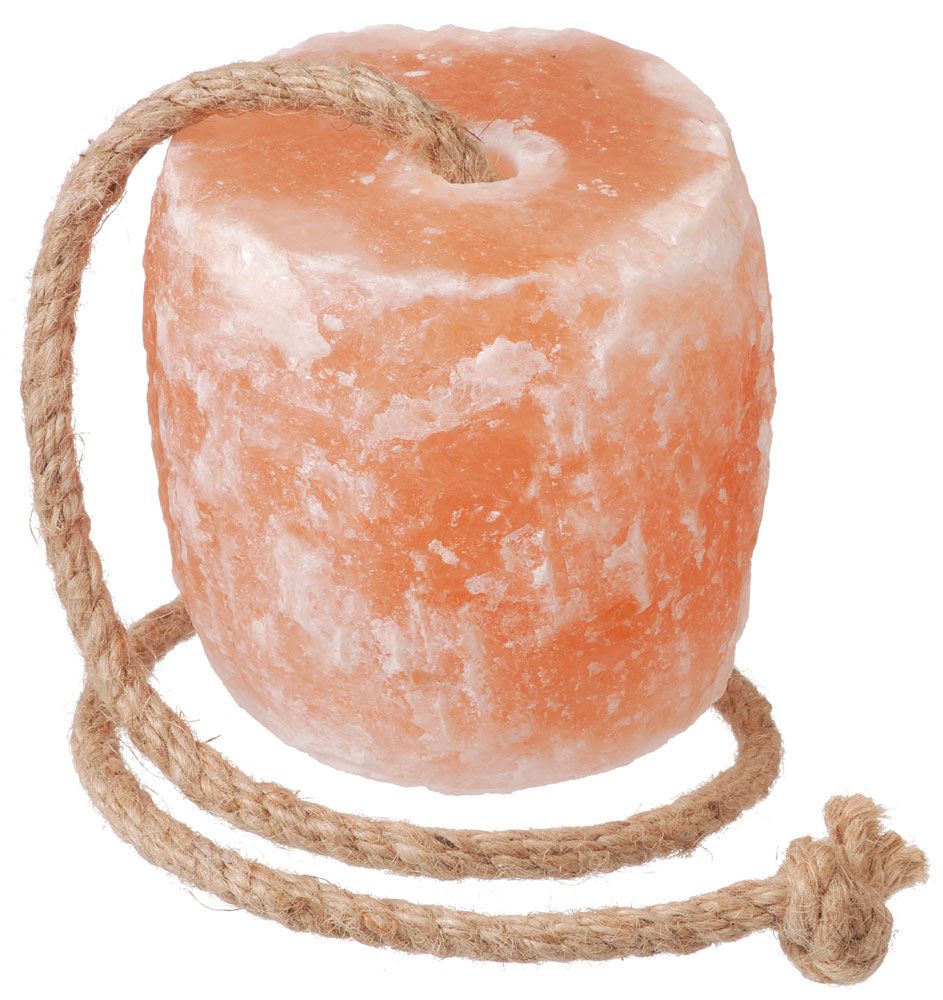
But jeez, they were expensive, and he went through them about once a month - or sometimes much less time. They were usually the first thing to fall off the list if I had an unexpected vet visit or farrier bill. Eventually they became an occasional treat. He always loved them, but I was buying them at the rate and price of a good joint supplement!
Honestly, I just bought whatever was available at Tractor Supply, and there are some other options that might've been better as holders: some that hang over the side of the stall, for example. That would save me time fishing it out of the shavings in the back of his stall on a regular basis. But then, they wouldn't hold the small chunks at the end as well, so it probably evens out.
Since I've started doing this, he's gone through three blocks at a rate of about one every 6-8 months. I pay about $10 for them at Tractor Supply, depending on sale prices. Very affordable! But is he getting enough salt?
Let's say it's the inside number of 50 lbs in 6 months. That's 180 days, so on average 1/4 lb a day, or 4 ounces. Per my math, that's actually a little more than the approximate amount of salt for a 1,000 lb horse in regular work of 2.4 ounces. All things being equal, Tristan gets probably a little more salt than he should!
He does not, however, get enough to cause toxicity, and the amount he eats per day is highly variable. I'm going to assume he regulates himself.
So after all that, what am I going to do about his salt intake?
Absolutely nothing, actually. I set out to find out if the red, or added mineral, salt blocks were ok to feed him, and they are. I wanted to know if he was getting enough salt - and he definitely is!
Here's the only thing I might change: I might invest in an electrolyte supplement to add on days when he sweats more heavily in the summer. I'm talking very occasionally - once every two weeks. He's not much of a sweater, thanks to his desert heritage.
So that was a lot of work and reading for no change, but I feel better overall about my decisions. They were admittedly made on guesswork and instinct, but they turned out to be ok. (Not always the case!) And I hope that going through it all on the blog helped someone out there make decisions too.
Wednesday, August 6, 2014
How Should I Feed My Horse Salt? Part 1
I've been wondering about this topic for some time myself, so I decided to do some research.
The basic premise is that sodium and chloride (the building blocks of NaCl, salt) are essential to a horse's diet. This article on minerals from The Horse suggests that a horse in no work should be receiving 0.25% of its diet as salt, and a horse in full work, sweating regularly, should receive closer to 0.75% of its diet as salt.
So, let's do the math: a horse should consume 2% of its body weight per day; for a normal 1,000 lb horse, that's about 20 lbs a day. 0.25% of 20 lbs is 0.8 ounces, or approximately one tablespoon of salt. 0.75% of 20lbs is 2.4 ounces, or approximately 1/4 cup of salt. So if you have a draft horse in the summer in regular work, your horse might need as much as 1/2 cup of salt a day!
It's tough for horses to overeat salt, especially if they have access to water - excess minerals will just pass through with urine. It is possible, though, for horses who drink briny water (in the absence of fresh, clean water) or flat-out eat a salt block. Symptoms include colic, diarrhea, and weakness of the limbs. Most people believe that horses will self-regulate, eating as much salt as their bodies need. Some horses may lick dirt or rocks, or eat the roots of plants and grass, in order to get at extra minerals when their bodies are lacking them.
(For fun again, here's the math. A lethal dose of salt for horses is considered 2.2g/kg. That works out to 2.2 lbs, or a little more than 3 1/2 cups of salt. Your horse would basically have to eat most of a 3lb salt block in a short time period.)
Horses get salt through their regular food intake: processed grain, hay, and grass. Most of the time, though, these food sources don't add up to enough, especially if the horse is in any kind of work and sweating. Salt is a key part of the electrolyte balance that allows a horse to function - see this article, again from The Horse, for a fairly long and complicated explanation of the role electrolytes play in equine biology. (You can do a quick Google or take a look at your grain bag label to see how much salt is in the grain, and you can almost always send your hay out to be tested for the same information, if you really want to get down into the weeds for this information.)
In short, you almost always need to supplement salt in your horse's diet. But how do you do that? Here are the most common ways, with their pros and cons.
Loose Salt


Pros: These really are the only salt blocks that are 100% meant for horses. Horses love them. They do provide quite a lot of nutritional kick to them. If your horses are pastured 24/7, on range, or do not get any grain, these can be a great supplement.
Cons: Molasses! Any horse with sugar sensitivities should stay far away from these blocks. Many horses, in fact, will go after these until they are gone because they reward licking with great taste beyond just satisfying a salt craving. They're also not really salt blocks: only 10-12% in the Dumor block, as opposed to the 95%+ of a typical salt block. They are way more expensive than a plain salt block, easy 2-3x as much.
They also have a lot in them, most of which is supplied by processed grain. So if your horses is on any kind of grain, they probably don't need what's in these blocks. Note that many of these blocks also contain selenium, which is dangerous in large quantities.


In the reading I've done, here's the consensus: most horses do not need a daily electrolyte. If they're in average work, they'll replenish what they need from salt, hay, and grain. If they're in heavier work in the heat, they may need a general supplement on that day, one dose or so. Horses in intensive work, such as endurance rides, may need electrolyte supplementation during that work. Basically, if they're burning through it faster than average eating can replenish. It is, however, all too easy to overdose on electrolytes and cause a general system imbalance, so you shouldn't just pour them down your horse's throat. It's important to know and watch your own individual horse if you're doing high-exertion exercise. (And even then, you can get into trouble, unfortunately; horse sports are not without risk.)
The purpose of this blog post, though, is to consider ways to get salt into your horse, so with that objective in mind:
Pros: electrolytes provide a full-spectrum replacement alongside salt, which can be great
Cons: your horse probably doesn't need them, so this is NOT the main way you should plan on getting salt into his system; examine labels carefully to make sure that the minerals you need are there, and that it's not loaded with added sugar.
SO. Whew. If you've stuck with me through that, congratulations! Those are the basic ways to get salt into your horse's diet.
In Part 2, coming soon, I'll discuss what I have used in the past for Tristan and what I'm going to do going forward based on this research.
The basic premise is that sodium and chloride (the building blocks of NaCl, salt) are essential to a horse's diet. This article on minerals from The Horse suggests that a horse in no work should be receiving 0.25% of its diet as salt, and a horse in full work, sweating regularly, should receive closer to 0.75% of its diet as salt.
So, let's do the math: a horse should consume 2% of its body weight per day; for a normal 1,000 lb horse, that's about 20 lbs a day. 0.25% of 20 lbs is 0.8 ounces, or approximately one tablespoon of salt. 0.75% of 20lbs is 2.4 ounces, or approximately 1/4 cup of salt. So if you have a draft horse in the summer in regular work, your horse might need as much as 1/2 cup of salt a day!
It's tough for horses to overeat salt, especially if they have access to water - excess minerals will just pass through with urine. It is possible, though, for horses who drink briny water (in the absence of fresh, clean water) or flat-out eat a salt block. Symptoms include colic, diarrhea, and weakness of the limbs. Most people believe that horses will self-regulate, eating as much salt as their bodies need. Some horses may lick dirt or rocks, or eat the roots of plants and grass, in order to get at extra minerals when their bodies are lacking them.
(For fun again, here's the math. A lethal dose of salt for horses is considered 2.2g/kg. That works out to 2.2 lbs, or a little more than 3 1/2 cups of salt. Your horse would basically have to eat most of a 3lb salt block in a short time period.)
Horses get salt through their regular food intake: processed grain, hay, and grass. Most of the time, though, these food sources don't add up to enough, especially if the horse is in any kind of work and sweating. Salt is a key part of the electrolyte balance that allows a horse to function - see this article, again from The Horse, for a fairly long and complicated explanation of the role electrolytes play in equine biology. (You can do a quick Google or take a look at your grain bag label to see how much salt is in the grain, and you can almost always send your hay out to be tested for the same information, if you really want to get down into the weeds for this information.)
In short, you almost always need to supplement salt in your horse's diet. But how do you do that? Here are the most common ways, with their pros and cons.
Loose Salt

Exactly what it sounds like: loose salt, added to your horse's feed. You can add this in a couple of ways. Some people dress grain with it, much like a supplement, a tablespoon or two at a time. Some people leave out a bucket of loose salt for the horse to eat as it chooses.
Pros: Easiest to eat, practically guarantees a daily salt intake, doesn't take up room in a horses's stall or field
Cons: Salt might turn some horses off grain, overeager horses will eat too much, must be fed in a stall, could get expensive, might get skipped if you're boarding (like any other supplement)
I found argument both ways about exactly what type of loose salt to use: iodized salt for people? loose bagged salt for livestock? something in-between? No really clear answer here.
Salt Blocks: White

These blocks come in various sizes, from the small 3lb ones that you put on a wall to the large 50lb block that's pictured here.
Pros: Inexpensive (usually $3-5 for the 3lb blocks and $10-15 fot the 50lb blocks), last a long time, can really take a beating, provide an entertainment value alongside nutrition
Cons: There is a school of thought that believes these blocks are meant for cattle, and a horse's smoother tongue cannot lick long and hard enough to get enough salt off the block. This school of thought argues that horses often resort to biting the blocks, which can cause TMJ and other jaw irritation and then lead to breaking off large, unhealthy chunks that can cause salt poisoning. They also take up space in a stall, whether on the wall or on the floor.
Salt Blocks: Trace Minerals


This is a fairly wide category; if you search at Tractor Supply on "salt block" you'll return a few dozen variations with different trace minerals. I've put up photos of the two most common here. On the left, a salt block with added sulfur; on the right, one with added iron. You have to look at the ingredients list for precisely what proportions of what minerals are represented. Each color typically reflects a different mineral composition. For the sulfur and iron blocks, they're about 95-97% salt and 3-5% other mineral.
Pros: Much the same as a plain salt block, these are inexpensive (maybe a dollar or two more than plain salt), durable, and slow a horse's consumption down
Cons: Same as above; are these really meant for cattle?
There is an interesting additional con to consider, however, and it's this one that sent me on my original research quest. Are the added minerals bad for horses? I did quite a lot of reading, and the most reputable sources pointed out that these are still mostly just salt, and that a horse would really have to consume a LOT in one day to reach any kind of overload on the minerals. That said: there are some that really should not be eaten by horses, so avoid anything that's specifically formulated for other animals like sheep or goats. (There are some minerals that can be overconsumed, selenium being the first among these.)
Some anecdotal reports suggest that feeding the sulfur blocks can be a sort of natural fly repellent, much like apple cider vinegar. There's no scientific evidence to support this. Sulfur is a necessary component of a horse's diet, but a tiny one, and they pretty much get what they need from their regular feed.
Horse-Specific Mineral Blocks


The variations in this category are endless. You've definitely seen these, and they are often marketed with various flavors as "treats." These provide quite a lot more in the way of basic minerals and nutrients.
For example, here's the nutritional analysis for the Dumor Horse Block:
Crude Protein (min.) 16.00%, Lysine (min.).60%, Crude Fat (min.) 2.00%, Crude Fiber (max.) 10.00%, Calcium(Ca)(min.) 1.50%, Calcium(Ca) (Max) 2.00%, Phosphorus(P) (min.) .60%, Salt(NaCl) (min.) 10.00%, Salt(NaCl) (max.) 12.00%, Sodium(Na)(min.) 5.00%, Sodium(Na) (max.)6.00%, Copper(Cu) (min.) 55.00ppm, Selenium(Se) (min.) .60ppm, Selenium(Se) (max.) .70ppm, Zinc(Zn) (min.) 150.00ppm, Vitamin A (min.) 10,000IU/lb, Vitamin D(3) (min.) 2500IU/lb, Vitamin E (min.) 250IU/lb, Animal protein products-free.That's a LOT more stuff than is in any of the other salt blocks!
Now take a look at the ingredients for that same block:
Wheat Middlings, Cane Molasses, Salt, Dehydrated Alfalfa meal, Cottonseed meal, Ground Milo, Sunflower Meal, Calcium Carbonate, Bentonite, Ground Soybean Hulls, Rice Bran, Cracked Corn, Dehulled soybean Meal, Monocalcium Phosphate, Dicalcium Phosphate, L-lysine, Vitamin E Supplement, Copper Sulfate, Vitamin A supplement, Vitamin D3 Supplement, Ethylenediamine Dihydriodide, Manganous Oxide, Zinc Oxide, Calcium Iodate, Magnesium Oxide, Ferrous Sulfate, Mineral Oil, Sodium Selenite. 2.000% Ground Soybean Hulls.See #2? Molasses.
Pros: These really are the only salt blocks that are 100% meant for horses. Horses love them. They do provide quite a lot of nutritional kick to them. If your horses are pastured 24/7, on range, or do not get any grain, these can be a great supplement.
Cons: Molasses! Any horse with sugar sensitivities should stay far away from these blocks. Many horses, in fact, will go after these until they are gone because they reward licking with great taste beyond just satisfying a salt craving. They're also not really salt blocks: only 10-12% in the Dumor block, as opposed to the 95%+ of a typical salt block. They are way more expensive than a plain salt block, easy 2-3x as much.
They also have a lot in them, most of which is supplied by processed grain. So if your horses is on any kind of grain, they probably don't need what's in these blocks. Note that many of these blocks also contain selenium, which is dangerous in large quantities.
Himalayan Salt
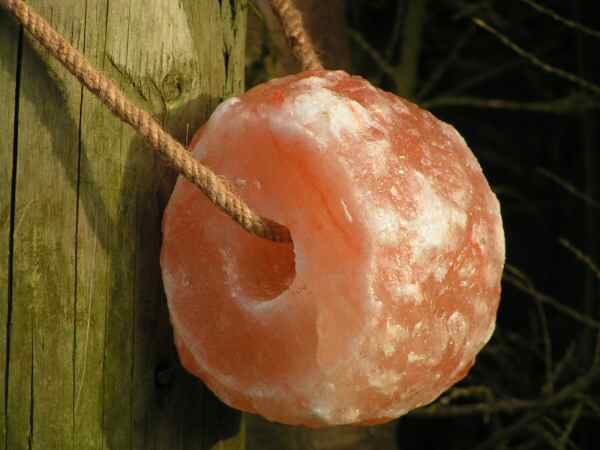
The newest and trendiest way to feed salt. What is "Himalayan" salt, exactly? Rock salt, or halite. Most of the pink stuff that's mined and marketed as Himalayan comes from Pakistan.
Here's a selection of claims about this salt: "it contains the full spectrum of 84 minerals and trace elements just like Mother Earth intended," "The Original® Himalayan Crystal Salt® is more than salt, it's a way of life -- or more precisely, a way of approaching aspects of living your life well," "a pure, hand-mined salt that is derived from ancient sea salt deposits, and it is believed to be the purest form of salt available."
Does anyone else have the same knee-jerk reaction to fads that I do? Sigh.
Himalayan salt does contain other trace minerals beyond just salt. What, exactly? We don't know. It depends. On a lot of things. It's really not clear whether any of them are beneficial or not. Certainly it's not analyzed before it's sent out to stores. So believe whatever you want about its human benefits, here's what it does for horses.
Pros: much harder than the processed salt blocks - can last much longer, often comes on a neat rope hanging thingy, your horses will look cooler and more loved than all his friends with his trendy pink salt lick
Cons: those extra trace minerals, super expensive, that same hardness might work against it (see above for arguments about effective salt intake)
Electrolyte Supplements

Last but not least: since we are feeding our horses salt primarily to aid in their water intake and exercise resources (here's that article again from The Horse for the technical stuff), you can also substitute or supplement your horse's salt consumption with electrolytes. (Here's a good recent thread from the Chronicle of the Horse forums about salt v. electrolytes.)
Electrolytes never contain just salt; at their most basic, they have sodium, potassium, chloride, calcium, magnesium. These are the basic minerals that help a horse to process heat & exercise and to sweat appropriately. There are endless variations in electrolyte supplements. Smartpak currently (August 2014) carries 15 different varieties, and interestingly enough, they list basic salt as one of them!
The purpose of this blog post, though, is to consider ways to get salt into your horse, so with that objective in mind:
Pros: electrolytes provide a full-spectrum replacement alongside salt, which can be great
Cons: your horse probably doesn't need them, so this is NOT the main way you should plan on getting salt into his system; examine labels carefully to make sure that the minerals you need are there, and that it's not loaded with added sugar.
SO. Whew. If you've stuck with me through that, congratulations! Those are the basic ways to get salt into your horse's diet.
In Part 2, coming soon, I'll discuss what I have used in the past for Tristan and what I'm going to do going forward based on this research.
Tuesday, August 5, 2014
August Goals Preview
So, after the dismal failure that was my July goals, what does August hold? From the 2014 Outline:
How much riding I get done depends entirely on the results of the vet appointment to look at Tristan's foot. I won't be able to haul out for jumping, that's for sure; funds are too tight. I might get out cubbing, depending on how the schedule/timing/soundness works out.
Not feeling very optimistic right now.
August
Keep turning those screws, keep hauling out to jump with Vergennes trainer, keep fine-tuning the dressage. Foxhunting if possible.
Possible events for riding or volunteering: Vermont Dressage Days (August 9-10), GMHA Combined Driving Event (August 23-24), GMHA Distance Days (August 29-31)I'm already signed up for a day of scribing at Dressage Days. I'd like to help at the GMHA CDE but I might have a family commitment that weekend.
How much riding I get done depends entirely on the results of the vet appointment to look at Tristan's foot. I won't be able to haul out for jumping, that's for sure; funds are too tight. I might get out cubbing, depending on how the schedule/timing/soundness works out.
Not feeling very optimistic right now.
Subscribe to:
Posts (Atom)