Thursday, December 12, 2013

Lazy by Design

Stacey at Behind the Bit linked to this article from Equus Magazine, which is a roundup of interesting tests done on horses to see what they prefer.

This line in particular stuck out to me:
One horse chose to exercise on the treadmill on two out of three of his trials. While that one horse may have had some predilection for exercise, the overwhelming preference was for “absolutely no exercise.”
 Of course, working on a treadmill is very different from running free. But this result does correlate with how horses behave in nature. Feral horses spend less than 1 percent of their time moving more quickly than a walk, and they pick up their pace in only one situation: when they are being chased.
Tristan says "I FREAKING TOLD YOU SO, CRAZY LADY. I will go willingly forward when there is a mountain lion in the ring with us, and NOT ONE SECOND BEFORE THEN."

Horse Cookies: Test 1

As I mentioned, I'm going to try my hand at baking horse cookies over the winter. I'm reading through recipes I find online, applying my own knowledge of baking techniques, and taste-testing them on the horses in the barn

Test #1: Peppermint Oatmeal Cookies

Tristan's favorite flavor in the whole world is peppermint, so I thought I'd start there. Many of the recipes online seemed to be based on an oatmeal cookie recipe, and I have one that I love, so I went over its ingredients and modified them slightly.

Chiefly, I swapped in crushed starlight mints for the white sugar, took out the cinnamon and vanilla, and halved the recipe (since it makes close to 100 cookies).


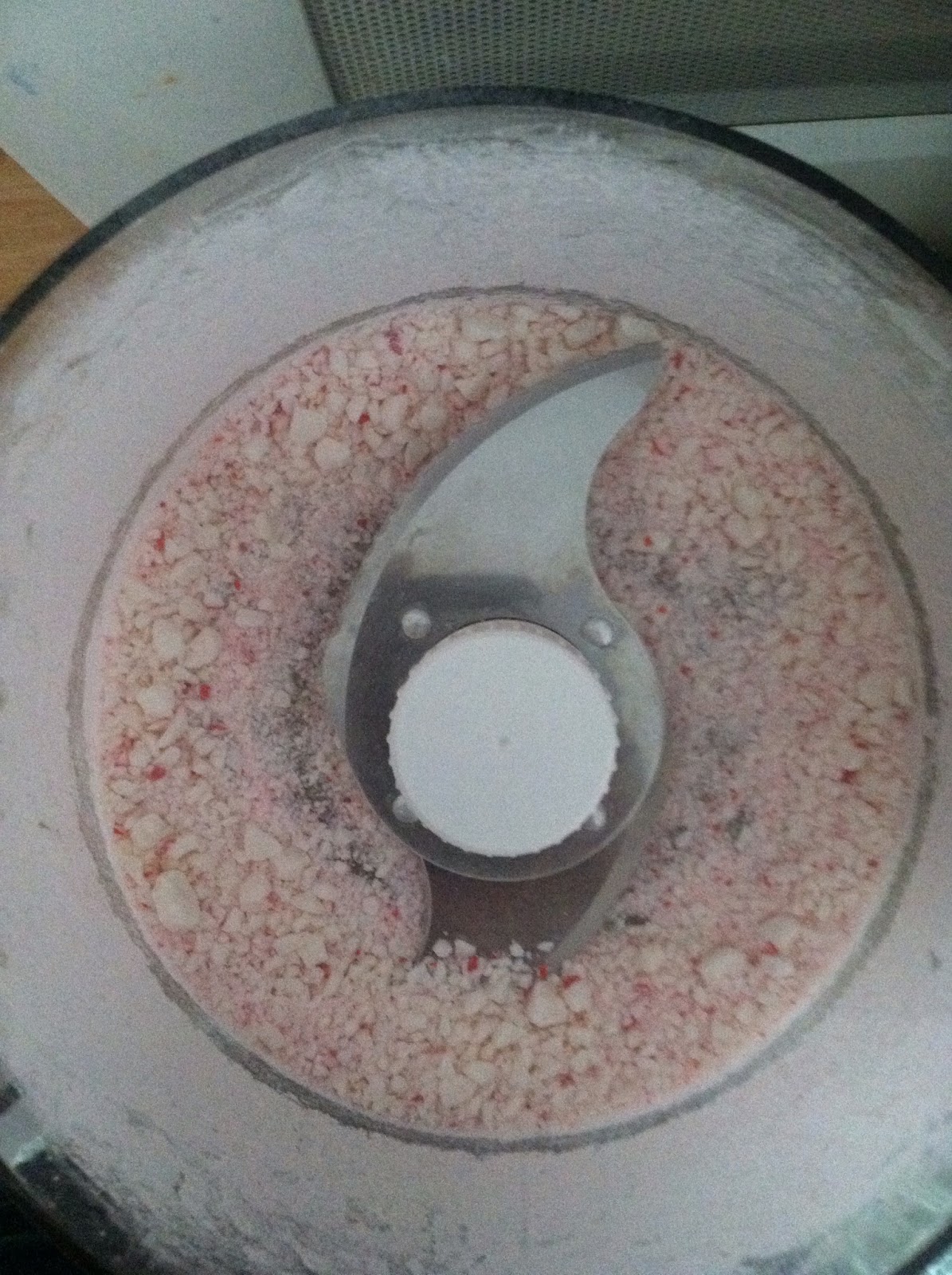
I first tried crushing the peppermints with my immersion blender's processor attachment. No dice. It wasn't nearly strong enough; it mostly bounced them around and chipped them a bit. Duly noted.


Go ahead, be jealous of my c. 1975 food processor. It was new in the box when my mother gave it to me; my grandmother had bought it on sale, stored it, and promptly forgot about it. It is retro and it worked much better than the immersion blender.


This was about the consistency of the crushed peppermint; in retrospect I might've done them a little less.


Swapping in the peppermint for white sugar.


All mixed up - I don't know if it comes through here, but the dough ended up almost pink, and much more moist than it usually does for these cookies, so this was where I started to worry.


Baked! The crushed mint melted a bit, which surprised me. Not too badly, luckily, but those white spots you see on the edges of the cookies are melted peppermint. It did make the pan a bit sticky to clean.

So: the taste test!

Tristan chewed his cookie and then spat it out. So I stuck it back in his mouth. And he spat it out. Whoops. He repeated that three or four times and then I gave up and dropped it in his bucket, just in case.

I got worried, and promptly tried feeding them to several other horses. Luckily, Tristan was the outlier. Here's how it worked out with the other horses:

Justin, Willow, Twinkie, Prince, Carousel, Brody: LOVED IT. Carousel in particular whickered at me for the rest of the time I was at the barn.

Rain, Skip, Monty: Meh. They ate them, but they weren't enthused.

With the horses that either really didn't like it (Tristan, the goober) and the rest that were kind of meh, it seemed to be a texture issue. These cookies were chewier than I had hoped for, which is a great quality in a human cookie, but not in a horse cookie.

My final test is to see how they store; they've been in a sealed container in my kitchen for a week since this initial baking and taste test. I'll do a second round of testing and then report back.

Wednesday, December 11, 2013

Winter in Vermont

A typical winter day:

8:15 am: Leave for work. Decide on the fly whether to pack riding clothes and drive, or set aside riding clothes and plan on walking home to change, grab a snack, and pick up the car. Check work email on phone, start swearing, decide to walk in case I get stuck at work until very late and there's no chance of heading to the barn.

8:30 am: Arrive at work. It wasn't that cold, right? Not too bad! The last 2-3 minutes were not a lot of fun but the end was in sight then, so totally do-able.

9:00 am: Check the weather forecast for the barn. Maybe it will be warmer and less snowy another day this week? Yeah...not so much.


1:00 pm: Start to feel caught up and on top of things, even caught up enough to properly eat lunch and read a non-work book for a little while. Victory!

1:15 pm: Wow, it's snowing a lot. Like, a lot.

1:45 pm: Ha! It's almost stopped entirely. Pfffft.

2:15 pm: Re-evaluate goals of making it to the barn, pending resolution of current work crisis.

2:30 pm: Crisis resolves, but it's snowing again...cars look like they're moving just fine down State Street, so if they can do it, I can, right?

3:00 pm: Hmmm...snowing harder...

4:00 pm: We're good! It's stopped!

4:45 pm: Declare surrender and shut down computer mid-composition of another email, pack up as quickly as possible, walk home in the dark; it's snowing again.

5:15 pm: Changed, fed, car is dug out of the snow, even feeling motivated and hale and hearty. Text boyfriend dinner options.

5:16 pm: Run back inside one last time to retrieve another pair of gloves/warm hat/snack.

6:00 pm: Arrive at the barn. Realize that wasn't the safest drive ever and reflect on the way in which you can tell the exact inch where town lines end and state roads crews take over. Oh well, there now.

7:30 pm: Finish ride, sweating underneath layers, frozen at extremities, close up the barn just as the sweat starts to freeze.

7:35 pm: Drive back to barn and triple-check all stall doors, all lights, and front barn door.

8:00 pm: Arrive home, start dinner, change into pajamas and, if really lucky, relax for an hour or so with a cup of tea and a book before bed. If unlucky...open up the computer and back to work!

New dressage tests!

The USEA has announced the new 2014 eventing dressage tests!

Here's Beginner Novice A, and here's Beginner Novice B.

First, a moment of honesty: these aren't really all that different from previous tests. There's only so much you can do with a BN test and still be fair. So we get a 20m circle at the ends, and a 20m circle in the center, both directions, trot and canter, with some free walks/diagonals thrown in for kicks.

Things I like:
- BNA has the circle in front of the judge to the right, which is our best direction.
- BNA has eons of time to prepare for that turn down the center line.
- BNB has a free walk down the long side: all the marching, none of the steering
- BNB has two diagonals at the working trot, which are a really great opportunity to show of a nice forward trot.
- They do read as really different tests, and BNB has just enough extra complexity to make it a nice B option

Things I don't like:
- BNA is nearly identical to every other circles-in-ends test ever written which means I am going to have trouble finding exactly the right spot for transitions.
- BNA has some fairly quick transitions from canter to working trot to center line which could cause some seriously wonky centerlines and clearly tests should be written so I have all the time in the world to prepare for the things that come up next, right?
- BNB has left lead circles first, sigh, goodbye points.
- BNB actually has a worse transition to the centerline and it puts the free walk at the very end of the test. So you go from working trot to medium walk to free walk to medium walk to working trot all on one half of the arena. That is going to end in tears more than once.
- Neither test has my beloved broken center line. I freaking loved that thing. Way easier than getting a green horse to go straight to C, much softer line all around. *sadface*

Tuesday, December 10, 2013

Lesson Notes

I do so love a lesson in which my ass is completely and thoroughly kicked, and that's just what we got yesterday.

I had to do a relative minimum of nagging to get Tristan moving forward, and he reached beautifully for the bit way, way earlier than he usually does. I was already counting the warmup a success, and we hadn't even gotten into the hard work yet.

First thing we tackled was getting him straighter through his whole body; he has a tendency to want to get a bit overbent in the bridle, and when I straightened that with the outside rein he threw his haunches in. So we worked for a while on really getting him straight and through, which to me felt almost a little bit counterbent. I've gotten too used to him overbending.

After that, we played with shoulder-in and leg-yielding to loosen him up. In the shoulder-in we focused on pushing from the hind end and not letting his neck overbend and his shoulder come in too far. In leg-yields it was all about small, quality steps and really maintaining the straightness. Shoulder is supposed to lead a teensy bit but not nearly as much as he was trying for; S. wanted me to allllmost think haunches in during the leg yield. We did both straightforward quarter-line-to-wall ones and then went out from the wall to the quarter line and back.

Finally, we cantered for some time and worked on getting him really forward and attempting some straightness in the canter. He was very tired afterwards, and had sweated quite a bit - all down his neck and chest, and on his face. I spent a fair bit of time rubbing him down with towels and checking on him under his cooler, but he dried off relatively quickly. It was warmer (in the 30s) so hopefully that's why - I still really don't want to clip him!

Takeaways:

1) Work on getting him supple behind the saddle and continue that through our rides. If he feels like he's locking up or lagging behind, throw in some leg-yields to break that up
2) Don't hang so much on the inside rein in the canter, and work generally on keeping a more stable rein length and hold throughout all gaits and especially through transitions.
3) Pick a spot - or a feel - that's easily attainable for us now, but still quality work, and back off to that to end each piece of our ride. For us right now that's a forward, on the bit trot with about a Training-level self-carriage.
4) In the canter, try for counter flexion down the long sides and then back to the correct flexion for the short sides to inject more of a feel for straightness. It's a LOT of work for the outside aids right now but it will keep adding up.